%2015.03.jpeg)
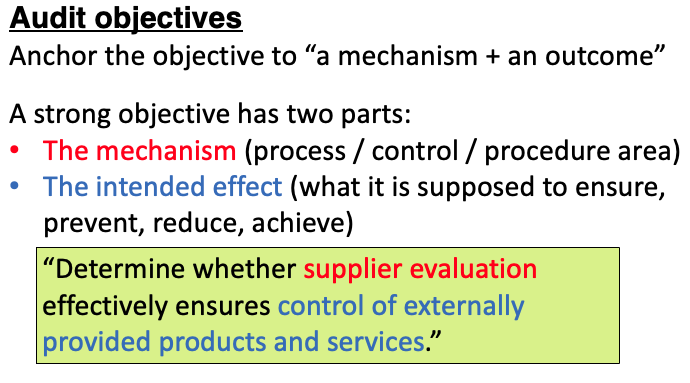
Design Clear and Defensible Audit Objectives
Most audits start with vague objectives such as “audit the purchasing process.” In this course, you will learn a practical method to design strong audit objectives by linking a mechanism (process or control) to the intended outcome that it must ensure. This simple structure helps auditors focus their work and makes audit conclusions clearer and easier to defend.
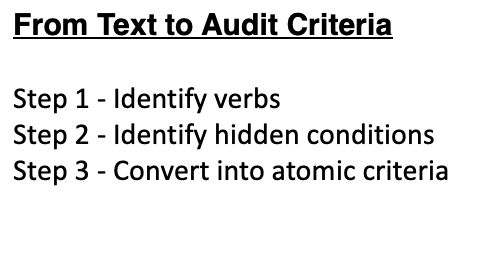
Turn Procedures into Verifiable Audit Criteria
Procedures and standards are often written in dense text that is difficult to audit in practice. In this course, you will learn a simple method to translate requirements into clear, verifiable audit criteria by identifying key verbs, uncovering hidden conditions, and converting them into atomic criteria that can be tested during the audit. This approach helps auditors move from reading documents to asking precise audit questions.
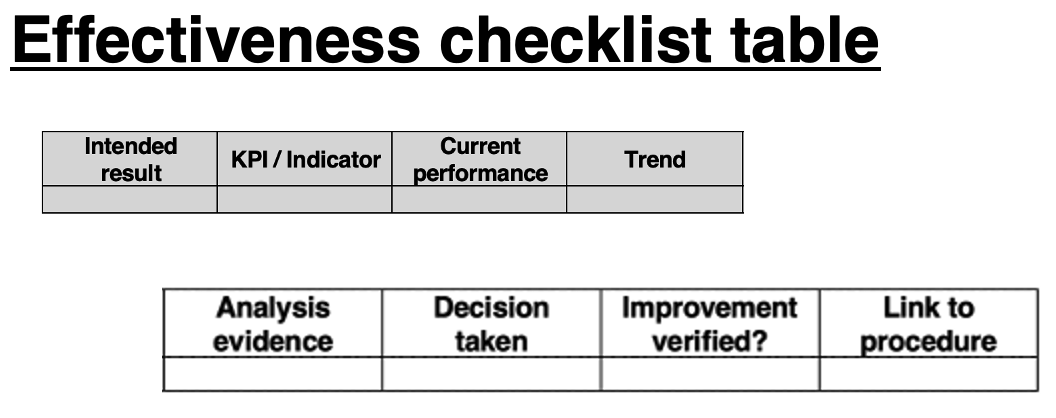
Audit for Effectiveness — Not Only Compliance
Many audits stop at checking whether procedures are followed. This course introduces a practical effectiveness checklist structure that links intended results, indicators, performance trends, analysis, and improvement actions. Using this approach, auditors can evaluate whether a process actually delivers the results it is supposed to achieve, not just whether the rules are followed.
About the course
Many auditors learn the theory of auditing, but when they start auditing real processes, they face practical questions: - How do you define a clear audit objective? - How do you translate procedures and standards into verifiable audit criteria? - How do you design checklists that guide the audit instead of limiting it? - And how do you move from observations to reliable conclusions? Thinking Like an Auditor – From Objectives to Reliable Conclusions was created to address these questions. The course focuses on the practical reasoning behind good auditing. It shows how an experienced auditor moves from a general audit topic to structured objectives, extracts verifiable elements from procedures and requirements, builds useful checklists, and evaluates whether processes actually deliver the intended results. The course is particularly suitable for auditors with limited experience who want practical ways to plan audits, ask better questions, and reach conclusions they can confidently support with evidence.

Carlos Pereira da Cruz
I have worked for many years helping organizations design, implement, and improve management systems, particularly in quality, environmental management, and process improvement. Throughout my work as a consultant, trainer, and auditor, I have noticed that many auditors understand the standards but struggle with the practical side of auditing: defining meaningful audit objectives, translating procedures into verifiable criteria, and reaching conclusions that are reliable and useful for the organization. Over the years, I developed practical approaches to address these challenges. Many of them emerged from real questions raised by auditors during workshops and training sessions — questions that forced me to translate experience into simple methods that can be applied in real audits. This course shares those tools. My goal is to help auditors think more clearly about their work, ask better questions during audits, and reach conclusions that are supported by evidence and trusted by the organizations they audit.
Curriculum
-
1
-
Lesson 1 - Procedure vs Process vs Control Mechanism Free preview
-
Lesson 1 - Procedure vs Process vs Control Mechanism Free preview
-
(Included in full purchase)
Lesson 2 - What ISO 9001 Really Means by “Documented Information”
-
Lesson 2 - What ISO 9001 Really Means by “Documented Information” Free preview
-
(Included in full purchase)
Lesson 3 - When It Makes Sense to Audit a Procedure
-
Lesson 3 - When It Makes Sense to Audit a Procedure Free preview
-
(Included in full purchase)
Lesson 4 - The Most Common Mistake in Procedure Audits
-
Lesson 4 - The Most Common Mistake in Procedure Audits Free preview
-
(Included in full purchase)
Module 1 - Support
-
Exercise about Module 1 Free preview
-
-
2
-
Lesson 1 - Why objectives change everything Free preview
-
Quiz for lesson 1 Free preview
-
(Included in full purchase)
Lesson 2 - Three levels of audit objectives
-
Quiz for lesson 2 Free preview
-
(Included in full purchase)
Lesson 3 - Turning objectives into questions
-
Quiz for lesson 3 Free preview
-
(Included in full purchase)
Lesson 4 - From objective to conclusion
-
Quiz for lesson 4 Free preview
-
(Included in full purchase)
Module 2 - Support
-
(Included in full purchase)
How to define good audit objectives - part I
-
(Included in full purchase)
How to define good audit objectives - part II
-
(Included in full purchase)
ToGo Deeper - How to define good audit objectives
-
(Included in full purchase)
How to extract questions from good audit objectives
-
(Included in full purchase)
ToGo Deeper - How to extract questions from good audit objectives
-
WORKSHEET - From Objective to Questions Free preview
-
(Included in full purchase)
ToGo Deeper - Examples
-
-
3
-
Lesson 1 - Identifying the process behind the procedure Free preview
-
Quiz for lesson 1 Free preview
-
(Included in full purchase)
Lesson 2 - Risk-based thinking in procedure audits
-
Quiz for lesson 2 Free preview
-
(Included in full purchase)
Lesson 3 - What would happen if this procedure didn’t exist?
-
Quiz for lesson 3 Free preview
-
(Included in full purchase)
Lesson 4 - Linking procedures to performance
-
Quiz for lesson 4 Free preview
-
(Included in full purchase)
Module 3 - Support
-
-
4
-
Lesson 1 - Reading for Verbs (Actions) Free preview
-
Quiz for lesson 1 Free preview
-
(Included in full purchase)
Lesson 2 - Identifying Responsibilities and Decision Criteria
-
Quiz for lesson 2 Free preview
-
(Included in full purchase)
Lesson 3 - Detecting Vague and Non-Auditable Statements
-
Quiz for lesson 3 Free preview
-
(Included in full purchase)
Lesson 4 - Is This Procedure Testable?
-
Quiz for lesson 4 Free preview
-
(Included in full purchase)
Module 4 - Support
-
Template for extracting criteria Free preview
-
Examples for Module 4 Free preview
-
-
5
-
Lesson 1 - What Are Audit Criteria? Free preview
-
Lesson 1 - What Are Audit Criteria? Free preview
-
(Included in full purchase)
Lesson 2 - Extracting Criteria From Procedures
-
(Included in full purchase)
Lesson 2 - Extracting Criteria From Procedures
-
Example - From extraction to findings Free preview
-
(Included in full purchase)
Lesson 3 - Converting Text Into Verifiable Conditions
-
Lesson 3 - Converting Text Into Verifiable Conditions Free preview
-
(Included in full purchase)
Lesson 4 - Building Traceable Audit Logic
-
Lesson 4 - Building Traceable Audit Logic Free preview
-
(Included in full purchase)
Module 5 - Support
-
-
6
-
(Included in full purchase)
Lesson 1 - What a Good Checklist Looks Like
-
Lesson 1 - What a Good Checklist Looks Like Free preview
-
(Included in full purchase)
Lesson 2 - Avoiding Cookie-Cutter Checklists
-
Lesson 2 - Avoiding Cookie-Cutter Checklists Free preview
-
(Included in full purchase)
Lesson 3 - Designing Questions and Evidence Columns
-
Lesson 3 – Designing Questions and Evidence Columns Free preview
-
(Included in full purchase)
Lesson 4 - Sequencing for Logical Flow
-
Lesson 4 - Sequencing for Logical Flow Free preview
-
Module 6 - Support Free preview
-
Compliance checklist template Free preview
-
Logical Flow Mapping Worksheet Free preview
-
(Included in full purchase)
-
7
-
(Included in full purchase)
Lesson 1 - Starting From Intended Results
-
Lesson 1 - Starting From Intended Results Free preview
-
(Included in full purchase)
Lesson 2 - Identifying KPls and Indicators
-
Lesson 2 - Identifying KPIs and Indicators Free preview
-
(Included in full purchase)
Lesson 3 - Auditing Before Entering the Process
-
Lesson 3 - Auditing Before Entering the Process Free preview
-
(Included in full purchase)
Lesson 4 - Detecting Procedures That "Work on Paper"
-
Lesson 4 - Detecting Procedures That “Work on Paper” Free preview
-
(Included in full purchase)
Module 7 - Support
-
Effectiveness Checklist Template Free preview
-
(Included in full purchase)
Module 7 - Simulation Exercise #1
-
(Included in full purchase)
Module 7 - Simulation Exercise #2
-
(Included in full purchase)
-
8
-
(Included in full purchase)
Lesson 1 - What Can Go Wrong?
-
Lesson 1 - What Can Go Wrong? Free preview
-
(Included in full purchase)
Lesson 2 - Failure Modes in Procedures
-
Lesson 2 - Failure Modes in Procedures Free preview
-
(Included in full purchase)
Lesson 3 - Risk-Driven Questions
-
Lesson 3 - Risk-Driven Questions Free preview
-
(Included in full purchase)
Lesson 4 - Sampling Based on Risk
-
Lesson 4 - Sampling Based on Risk Free preview
-
(Included in full purchase)
Module 8 - Support
-
Failure Mode Mapping Template Free preview
-
Compliance vs Risk-Based Checklist Comparison Free preview
-
Risk Interview Question Library Free preview
-
(Included in full purchase)
-
9
-
(Included in full purchase)
Lesson 1 - Crossing the Brick Wall
-
Lesson 1 – Crossing the Brick Wall Free preview
-
(Included in full purchase)
Lesson 2 - Interviewing With Purpose
-
Lesson 2 - Interviewing With Purpose Free preview
-
ToGo Deeper - How to use the checklist in the field Free preview
-
(Included in full purchase)
Lesson 3 - Observing Operations
-
Lesson 3 - Observing Operations Free preview
-
(Included in full purchase)
Lesson 4 - Triangulating Evidence
-
Lesson 4 - Triangulating Evidence Free preview
-
ToGo Deeper - Triangulation of Evidence Free preview
-
(Included in full purchase)
Module 9 - Support
-
(Included in full purchase)
-
10
-
(Included in full purchase)
Lesson 1 - Detecting Gaps Between Document and Reality
-
Lesson 1 - Detecting Gaps Between Document and Reality Free preview
-
(Included in full purchase)
Lesson 2 - Practice Ahead of Procedure
-
Lesson 2 – Practice Ahead of Procedure Free preview
-
(Included in full purchase)
Lesson 3 - Procedure Followed but Ineffective
-
Lesson 3 – Procedure Followed but Ineffective Free preview
-
(Included in full purchase)
Lesson 4 - Identifying Systemic Patterns
-
Lesson 4 – Identifying Systemic Patterns Free preview
-
Module 10 - Support Free preview
-
Module 10 - Gap Diagnosis Tool Free preview
-
Module 10 - Risk-Linking Template Free preview
-
Module 10 - Simulation Exercise #1 Free preview
-
Module 10 - Simulation Exercise #2 Free preview
-
(Included in full purchase)
-
11
-
(Included in full purchase)
Lesson 1 - What Is a Sufficient Sample?
-
Lesson 1 – What Is a Sufficient Sample? Free preview
-
(Included in full purchase)
Lesson 2 – Proportionate vs Disproportionate Sampling
-
Lesson 2 – Proportionate vs Disproportionate Sampling Free preview
-
(Included in full purchase)
Lesson 3 - When One Case Is Enough
-
Lesson 3 – When One Case Is Enough Free preview
-
(Included in full purchase)
Lesson 4 – Protecting the Credibility of Your Conclusions
-
Lesson 4 – Protecting the Credibility of Conclusions Free preview
-
Module 11 - Support Free preview
-
Module 11 - Sampling Decision Tree Template Free preview
-
Module 11 - Conclusion Rewriting Exercises Free preview
-
Module 11 - “Is This Enough?” Case Exercise Pack Free preview
-
(Included in full purchase)
-
12
-
Introduction Free preview
-
Lesson 1 - From the audit objective to the high-level questions Free preview
-
Lesson 2 – From the high-level questions to the “where to go” and to “what requirements” Free preview
-
Lesson 3A - From risks and auditors to an itinerary with meaning Free preview
-
Start Thinking Like an Auditor
If you want practical methods to design clear audit objectives, build meaningful checklists, and reach reliable conclusions, this course will give you the tools to do it.
€79,00